A guide to home fragrance
How Reed Diffusers Shape a Room’s Scent: A Guide to Zafferano
A reed diffuser doesn’t announce itself with a switch or a burst of mist. It works by degrees: fragrance travels up slender wooden sticks and settles into the air around them. The Zafferano Diffuser, with saffron, olibanum resin and amber, offers a warm, measured way to give a room its own olfactory signature.
Every room has a scent, even when no one has chosen one. It may be the clean trace of laundered fabric, the faint smell of timber warmed by the afternoon sun, or the unmistakable evidence of dinner. A home fragrance does not erase these ordinary details so much as add another layer—a quiet impression that can make a space feel settled, welcoming or newly attended to.
Among the available ways to introduce that layer, reed diffusers are notable for their restraint. There is no flame to light and no device to operate. Instead, fragrance moves slowly through a set of reeds and disperses into the surrounding air. The process is simple, but its result is not entirely automatic. Placement, room size, airflow and routine care all influence what a diffuser contributes, and how strongly it is noticed.
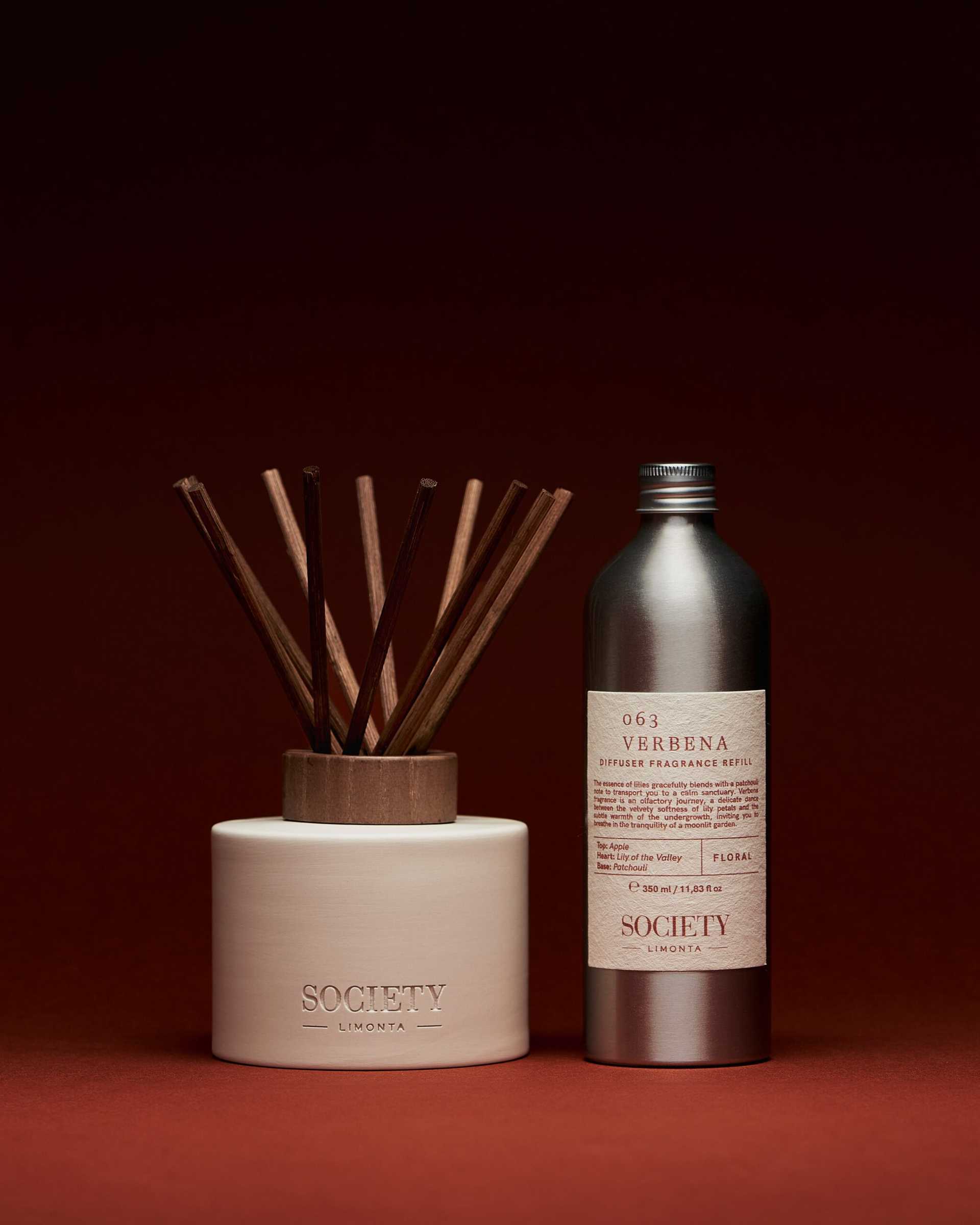
The Zafferano Diffuser brings together spicy saffron, olibanum resin and amber in a format intended for gradual release. Its fragrance is supplied with 12 wooden sticks and one refill; the refill is also available separately. The maker describes a diffusion duration of at least four months, though the experience in any particular home will depend on the conditions around the vessel.
The quiet mechanics of a reed diffuser
A reed diffuser relies on capillary action. The lower ends of its sticks sit in scented liquid, which is drawn through tiny channels in the reed material. Once fragrance reaches the exposed portion, volatile aromatic compounds evaporate into the air. Air movement then carries those molecules beyond the immediate area of the vessel.
That mechanism is why a diffuser can scent a room without electricity or a flame. It is also why the result tends to be continuous rather than dramatic. A reed diffuser does not produce the concentrated plume associated with some sprays, nor does it offer the on-and-off control of a powered device. It creates a steady, ambient presence whose intensity shifts with its surroundings.
The reeds are both the delivery system and a practical control. More exposed reed surface can generally mean more evaporation, while fewer sticks may make the fragrance less prominent. This is not a precise dial: the room’s temperature, ventilation and the particular composition of the fragrance matter too. The useful principle is to begin conservatively, observe how the scent behaves, and adjust only if the room calls for it.
Because evaporation is part of the process, the liquid gradually diminishes. A diffuser’s stated duration is best understood as an estimate under expected conditions, not a guarantee that applies equally to every room. A warm, breezy space may use fragrance more quickly than a cooler, less ventilated one. The placement that gives the most noticeable scent may also shorten the interval before a refill is needed.
What Zafferano brings to the room
The character of a diffuser begins with its fragrance. In Zafferano, saffron lends a spicy impression, olibanum resin adds a resinous dimension, and amber rounds the composition with warmth. Together, these notes suggest a profile that feels richer and more enveloping than a purely citrus or green fragrance. That description is a guide, not a promise that every person will perceive the same balance: scent is personal, and a room can change the way a fragrance seems to unfold.
Fragrance also has a relationship with context. In a room with soft textiles and warm-toned finishes, an amber-led character may feel at home. In a bright, airy space, the contrast can be part of its appeal. The purpose need not be to make the entire room smell strongly of the diffuser. A considered result is often more appealing when the scent is discovered as someone enters or moves through the space, rather than dominating every moment spent there.
This is one reason gradual-release home fragrances can suit shared areas. The scent is present without requiring a daily ritual, and there is no flame to supervise. Still, subtle does not mean universal. People vary in their sensitivity to fragrance, and what feels gentle to one person may be too pronounced for another. In a home where preferences differ, a smaller number of reeds and a more open location can be sensible starting points.
A diffuser is not an air purifier and should not be treated as one. It introduces fragrance; it does not filter particles, remove pollutants or establish that indoor air is cleaner. Keeping that distinction clear helps set reasonable expectations. Home fragrance is an element of atmosphere, not a substitute for ventilation, cleaning or equipment designed to address air quality.
Placement is part of the fragrance
The best location is not necessarily the center of the room. A diffuser needs a stable, appropriate surface and enough surrounding space for its scent to disperse. A console, shelf or side table may work well if it is away from busy edges, where the vessel could be knocked over, and positioned where the fragrance can travel without being trapped behind objects.
Air movement can help distribute fragrance. A spot near a doorway or in a room with gentle circulation may allow the scent to be noticed farther away. But direct airflow from a fan, heating vent or open window can make the release less consistent and may cause the liquid to evaporate faster. The goal is not a strong current; it is enough movement for the fragrance to mingle with the room’s air.
Sunlight and heat deserve particular attention. Direct sun or a warm surface can affect the liquid and accelerate evaporation. Keep the diffuser away from radiators, fireplaces, heated appliances and sunny windowsills. A cooler, shaded position is often a better choice for maintaining a more even experience and making the contents last longer.
Scale matters as well. In a compact room, a full set of reeds may create a more noticeable effect than expected. In a large, open-plan area, the same arrangement may feel more restrained. Rather than assuming one placement will work everywhere, think about where the fragrance should be encountered: near an entrance, in a living area, or in a quieter corner that benefits from a soft ambient note.
Consider the room’s other scents before settling on a location. Cooking, cleaning products, fresh flowers, candles and laundry all contribute to the background. A diffuser does not operate in isolation; its fragrance meets what is already there. A position away from strong competing odors may make its character easier to recognize, while a modest presence can prevent several scents from crowding one another.
A measured approach to reeds and intensity
It can be tempting to insert every reed immediately and expect the fragrance to settle into place. A more deliberate approach gives you a chance to learn how the diffuser behaves in your home. Start with a restrained arrangement, allow the scent time to disperse, and assess it after the room has been occupied and ventilated through its usual routine. Fragrance can seem stronger near the vessel than it does from across the room.
If the effect is too subtle, additional reeds may increase the exposed surface and encourage a stronger release. If the scent is too noticeable, reducing the number of reeds can help. Changes are not instantaneous: the reeds need time to absorb and release fragrance, and a room’s air movement continues to shape the result. Making one adjustment at a time is more informative than changing the setup repeatedly.
Some diffuser users turn reeds to refresh the fragrance near the top. That can briefly make the scent more apparent, but it also brings liquid onto the exposed portions of the sticks and may increase evaporation. It is not necessary to turn reeds on a fixed schedule. If you choose to do so, handle them carefully and follow any instructions supplied with the product. Avoid touching the liquid and keep the vessel steady during the process.
There is no universal “right” level of fragrance. The intended effect may be a gentle impression at the threshold, rather than a scent that remains equally strong in every corner. A diffuser’s success is not measured by how far its fragrance travels or how quickly it is noticed. Comfort, context and the preferences of everyone who shares the room are better guides.
Care, surfaces and everyday safety
Care starts with the vessel. Keep it upright on a level, stable surface, and handle the fragrance liquid with attention. The product’s care guidance specifically advises preventing liquid from touching the container’s exterior to avoid stains. A small spill should not be treated casually: wipe it up promptly according to the product instructions, and protect the surface beneath the diffuser where needed.
Fragrance oils may mark or damage some finishes, including painted, polished or delicate surfaces. A coaster or protective tray can add a useful buffer, provided it is stable and does not obstruct the reeds. Keep the diffuser away from fabrics, books and other materials that could be affected by a spill. Do not place it where it could be reached or knocked over by children or pets.
Like other scented household products, a reed diffuser should be used according to its label. Keep the liquid away from eyes and skin, and out of reach of children and animals. Do not ingest it. If the contents are spilled, follow the care and safety directions provided by the maker. Anyone who finds fragrance irritating should reduce exposure, move the diffuser to another location or stop using it.
When the fragrance becomes faint or the liquid is depleted, check the product guidance before adding a refill. The Zafferano Diffuser includes one refill, with another refill available separately. Using the intended refill helps keep the fragrance experience aligned with the product, while careful handling reduces the chance of drips on the vessel or surrounding furniture.
Routine care does not have to become a chore. A quick visual check can confirm that the vessel is upright, the surface is clean and the reeds are positioned as intended. Notice whether the room has become warmer or more ventilated than usual; seasonal changes may alter how quickly fragrance is released. Small observations are more useful than expecting the same performance under every condition.
Making fragrance part of a room, not the whole room
Good fragrance placement is a form of editing. A room already has its materials, light and daily rhythms. The diffuser adds one sensory detail, and its contribution is most successful when it works with those existing features rather than trying to overwhelm them. In a living room, that might mean a warm note that greets visitors without competing with conversation. In a hallway, it might provide a subtle transition between the outdoors and the home.
It is also worth thinking about duration. A steady scent may become less noticeable to someone who spends a long time in the room, a familiar effect sometimes called scent adaptation. That does not necessarily mean the diffuser has stopped working. Before adding more reeds or moving it closer, step away and return later, or ask someone who has not been in the room whether the fragrance is apparent. This simple check can prevent overcorrecting.
Layering fragrances calls for similar restraint. A scented candle, room spray or another diffuser may combine unpredictably with Zafferano’s saffron, olibanum and amber. If several products are used at once, their notes can blur into a crowded background. Let one fragrance establish itself before introducing another, and remember that clean air and an unscented room can be a deliberate choice too.
The same judgment applies to bedrooms and other personal spaces. A fragrance that feels inviting in a shared room may be less welcome beside a sleeping area, where exposure is prolonged and preferences are particular. Choose placement based on how the space is used, not simply on where a surface is available. If anyone in the household is sensitive to fragrances, keeping scented products out of that person’s space is a considerate starting point.
A practical checklist before you begin
- Choose a steady surface. Set the diffuser upright in a place where it is unlikely to be bumped or tipped.
- Avoid heat and direct sun. Keep it away from radiators, sunny windows and other warm locations that may affect the liquid.
- Look for gentle circulation. A little air movement can help fragrance travel, but avoid strong drafts and direct fan or vent airflow.
- Start with a modest number of reeds. Adjust gradually after observing the scent in the room.
- Protect nearby materials. Keep fragrance off the vessel’s exterior and away from furniture finishes, fabrics and other vulnerable surfaces.
- Respect household preferences. Consider how strongly everyone in the space responds to fragrance, and make changes accordingly.
- Follow product directions. Use the diffuser and refill as directed, and keep the liquid away from children and pets.
This checklist does not make a diffuser complicated. It reflects the fact that fragrance is shaped by small environmental details. A good location and a little attention can make the experience more consistent without turning a low-maintenance object into a project.
The appeal of a slower scent
Reed diffusers occupy an appealing middle ground: more continuous than a room spray, less involved than a candle, and independent of a powered device. Their strength is not spectacle. It is persistence—the possibility of a fragrance that is present in the background while the room remains recognizably itself.
The Zafferano Diffuser is built around that idea. Its combination of saffron, olibanum resin and amber gives it a warm, spiced profile; its wooden reeds release the fragrance gradually; and its supplied refill means the arrangement can continue beyond the first vessel of liquid. With a stated diffusion duration of at least four months, it is designed for an extended presence, though real-world longevity varies with placement and conditions.
Ultimately, how a diffuser shapes a room is not determined by the fragrance alone. It is the result of the liquid, the reeds, the air and the choices made around them. Set the vessel somewhere stable and shaded, allow gentle circulation, keep the fragrance off surrounding surfaces, and adjust the reeds according to the room’s response. The aim is not simply to make a space smell different. It is to make the scent feel considered—and to let it remain one detail among many in the life of a home.